Thursday, August 29, 2024

A Taste of Home: My Birthday Surprise with Lucky Charms in Argentina

I turned 47 this year, and let me tell you, it’s not easy to look like I’m in my late 30s without surgery or digital filters. A touch of skin cream and a good dye job certainly help, though! This year, my husband decided to give me a very special gift. No, it wasn’t a diamond ring or a chateau in Europe (neither of us could afford those luxuries), but what he got me was truly special to me.

Lucky Charms!

Lucky Charms

Now, hang on! I know what you’re thinking: "He got you cereal? What’s the big deal? It’s just a box full of sugar, calories, and carbs that you can buy at any store." Well, let me stop you right there. First of all, Lucky Charms has vitamins too—it says so right on the box. Second of all, Lucky Charms is one of several common cereal brands that are not sold in Argentine supermarkets. The last time I had a bowl of my favorite cereal was in 2012, just days before we took a plane and started our new life in Argentina. We haven’t been back to the States since, which means no Lucky Charms have touched these lips in over 12 years… until now.

Lucky Charms

How? You ask.

Distributors. More specifically, a distributor called Tomodachi Asian Food. As the name suggests, this company imports a variety of Asian products that are not commonly sold in Argentina. But they also offer a ton of food products from the States, too.

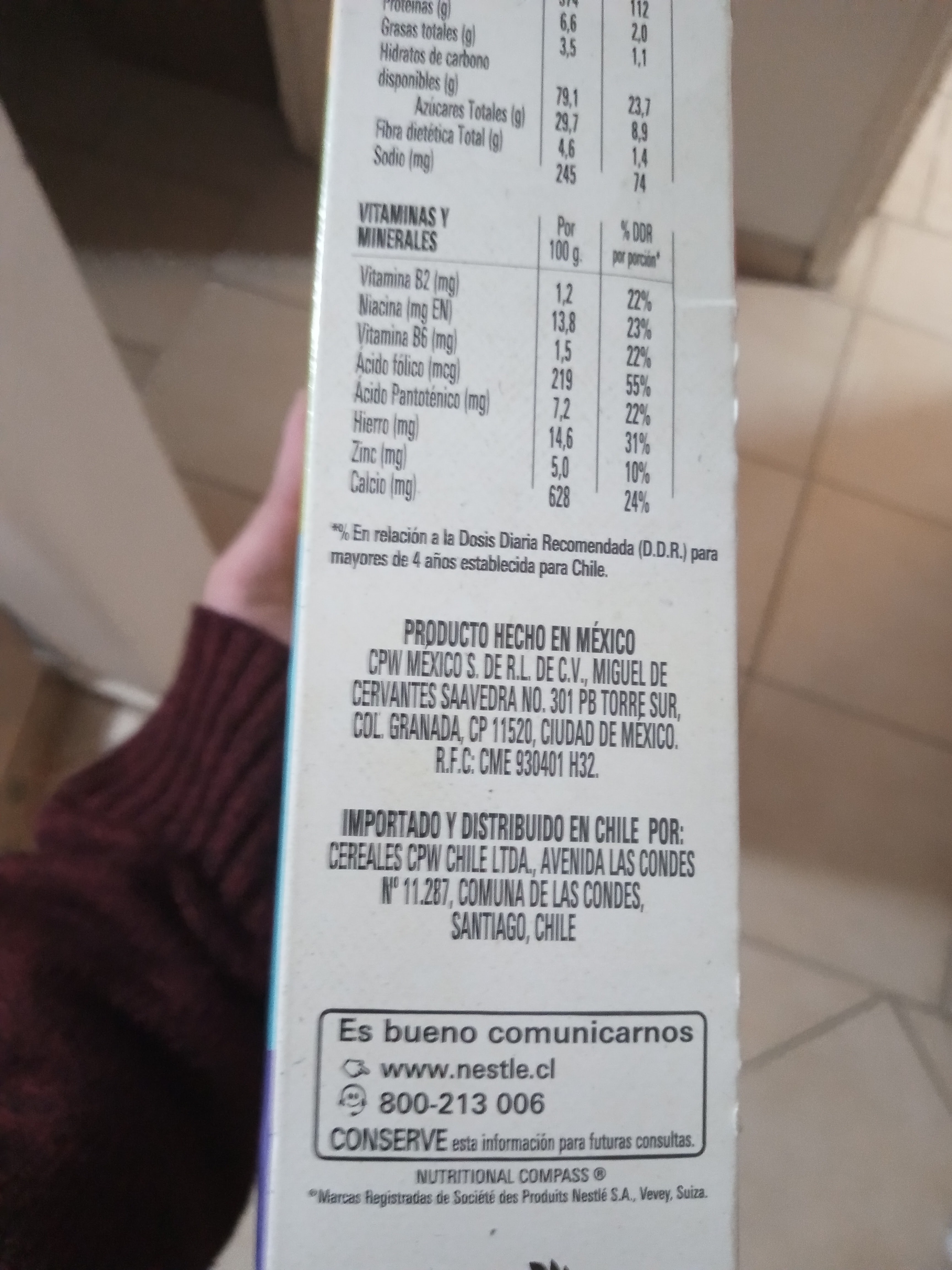
At first, I wasn’t sure how they managed it. Then I noticed that the Lucky Charms box was in Spanish, and the label on the back suggested it came from Chile. Maybe it’s easier to import directly from Chile than from the United States. I don’t know, and I don’t care. What matters most is that I was able to enjoy the magical taste of Lucky Charms once again.

Lucky Charms

But that’s not all.

A few weeks before my birthday, my husband and I ordered a few other items from Tomodachi Asian Food. The most notable among them was Kraft Mac and Cheese, which is also not commonly sold in Argentine supermarkets.

Kraft Mac & Cheese

Dr Pepper Cream Soda
Mike and Ike Megamix
Rice Krispies Treats Rainbow
Jelly Belly Holiday Favorites
M&M Fudge Brownie
Jolly Ranchers Gummies
Rocky Mountain Marshmallows
Tomodachi Asian Food

Distributors like Tomodachi and Kiosko 21 in Buenos Aires make it much easier to buy American food items like Pop-Tarts and Halloween-themed Oreo cookies. The prices, as you’ll see on their sites, might make you do a double take. After all, who wants to spend close to 80,000 Argentine pesos on cookies? But if you’re really craving a taste of home, you might just be willing to fork over the extra pesos. Besides, it won’t cost you nearly as much if you happen to have USD. So, check out what they have when you get a chance. I’ve hyperlinked the names of these places so you can just click and buy.

Happy shopping!

Wednesday, August 28, 2024

Haunted by Ghostly Store: Our Halloween Decor Delivery Drama

Halloween is just a couple of weeks away, and there's nothing I love more than decorating our home with our Halloween tree, Jack O’Lanterns, and an assortment of items that turn our space into something ghoulishly spooktacular.

Finding Halloween decor wasn’t always easy in Cordoba City. When we arrived in 2012, Halloween was virtually non-existent here. But over the years, party stores have started adding more and more items.

This year, we were lucky to discover an online store in Buenos Aires called Ghostly Store. They offer a range of ceramic Halloween decorations, including a few pumpkin plushies and gothic-looking mirrors.

Eager to add something new to our Halloween collection, we decided to order an assortment of items for about 135,000 Argentine pesos (approximately $142 USD). After waiting several weeks, our ceramic decorations finally arrived, and we couldn’t wait to see what was inside the box.

Let me share with you what we ordered.

Cereal Killer Bowl from Ghostly Store

Pumpkin Cup from Ghostly Store

Coffin Plate from Ghostly Store

Scream Cup from Ghostly Store

Jack O'Lantern from Ghostly Store

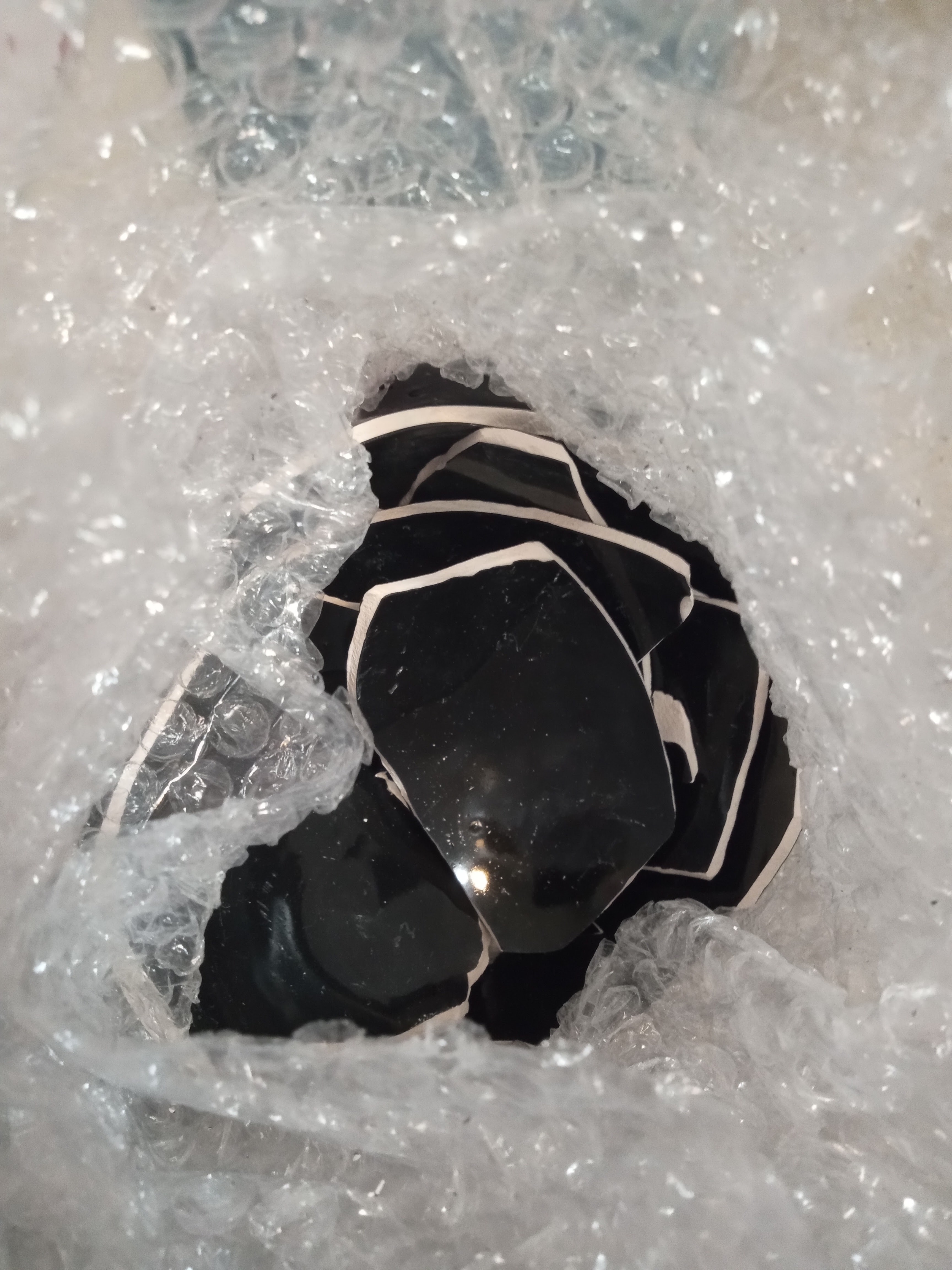
However, not everything was as we expected. Two pieces in particular were truly horrifying—but not in a fun Halloween way. We had ordered a large black cauldron and a Jack O’Lantern designed to hold candy. Instead, we received broken pieces that matched our broken hearts.

Damaged Cauldron from Ghostly Store
Damaged Jack O'Lantern from Ghostly Store

While the Jack O’Lantern seemed easy enough to repair, the cauldron was shattered into a lot of pieces. Considering the condition of the box, I was surprised that so many other items arrived intact. Clearly, we didn't pay that much money to fix damaged parts.

I guess I'm not really surprised. Disappointed definitely, but not surprised.

Correo Argentino is nothing like the United States Postal Service in the sense that the Argentine postal service sucks. I’m not saying USPS is perfect, but they do know how to handle packages (most of the time). In addition, most companies in the U.S., use sturdy boxes for shipping, but the one Ghostly Store used was flimsy. We also noticed they hadn’t labeled the box as “fragile.”

I emailed Ghostly Store to explain the situation. They apologized and promised to send replacements. It was very nice of them, but a month passed with no updates. I reached out again, and they apologized for the delay, explaining they were making more cauldrons and Jack O’Lantern candy holders. They promised to ship them once available. I expected this to mean a few more weeks, but I was wrong.

My original order was in May. The replacements were supposed to ship in June. By August, I still hadn’t received anything or heard from Ghostly Store. I contacted them again, and they once more apologized and shipped the replacement items. Within a week, my package arrived—but I wasn’t thrilled with what I found.

While the Jack O’Lantern candy holder was intact, the large cauldron was once again in a hundred pieces. That wasn't really shocking given that the flimsy box didn't have a fragile label this time either. Clearly, I wasn’t going to ask for yet another replacement, but I doubt I will order from Ghostly Store again.

Caramelero from Ghostly Store

Damaged Cauldron from Ghostly Store

Fortunately, a friend who had visited Buenos Aires a few months earlier bought a smaller cauldron mug from Ghostly Store at a horror convention and gifted it to us. I'll show you what it looks like in a future post.

Despite the order processing and shipping issues, Ghostly Store’s customer service reps were very kind. Though their kindness won’t bring my large cauldron back from the ceramic afterlife, we do have a really nice collection of Halloween-themed ceramic items to enjoy this year.

Now, if you’ll excuse me, I need to start planning for this year’s first Friday the 13th.

Unpleasant dreams!

Friday, June 21, 2024

Reflections on 12 Years in Argentina: From New York to Cordoba

We've officially marked 12 years of living in Argentina. Okay, so I didn't exactly throw a party or anything, but I've been reflecting a lot lately on what we've achieved since we moved here in 2012. Was coming here worth the hassle? Well, join me as I evaluate this decision that has seemingly left us financially unable to return home.

Let's rewind to 2009 when I was working for a New York company called Epiq Bankruptcy Solutions. After about two years of temping, I finally landed a temp-to-perm position at Epiq. This company handled all the bankruptcy paperwork for giants like Chrysler and Lehman Brothers. My role? Data entry for the daily claims we received. There was an overwhelming amount of work—so much so that the company had us, temps and full-timers alike, working from 11 am until 10 or 11 pm, Saturdays included. We were clocking close to 90 hours a week. But the upside of being worked to the bone was the time-and-a-half pay for overtime and company-paid dinners (up to $25 a night), plus a chauffeur to drive us home. The hours were brutal, but the pay and perks made it somewhat worthwhile. Eight months into my first year, I was hired full-time, which meant a pay raise and some limited benefits.

Epiq Bankruptcy Solutions

Then, a few months later, the claims we'd been feverishly entering started drying up. Suddenly, those fat paychecks barely covered our bills. And then, to add insult to injury, Epiq decided to lay off a large chunk of their workforce—myself included. The severance pay they gave us was a joke, barely two weeks' worth, and then New York taxes swooped in and took half of that. I was screwed, barely scraping by to cover rent and essentials. What little was left was spent on basic groceries like eggs and JELL-O packets. I'd never been in such a dire situation. I'd given my all to Epiq, only to be tossed aside like garbage. To be fair, they did this to other hardworking folks like me as well.

With our time and money running out, I hit up every temp agency I'd ever registered with, scrambling for another temp-to-perm gig. At first, all I found were meager assignments, many lasting only a day or a week. But money was money, and we needed it—especially with my husband in college full-time, needing funds for transportation and food.

By mid-2011, I landed a longer-term assignment at Bank of New York. My job was redacting client info from documents, scanning them, and filing the paperwork away. The pay was $12 an hour, no overtime, but it had two things Epiq didn't: a stunning city view from the cafeteria and no office drama. Epiq was a cesspool of personality clashes; at least Bank of New York wasn't that.

Bank of New York - Cafeteria

But even with this job, we barely scraped by in our shoebox apartment in the Bronx. Eventually, the assignment ended and I was relying on unemployment benefits, which sucked! 

After months of failed attempts to land a decent-paying job, my husband and I made a tough call: we decided to move to Argentina.

It was my last choice. Though I was born there, my folks took me away when I was five. I grew up American, knew no other customs but those of the States. My husband was Puerto Rican by ancestry, but red, white and blue like me. What the hell were we going to do in Argentina, a place whose culture was starkly different from any American or Latin culture we knew in the States?

My parents had retired to Argentina in 2007, buying several properties with their US dollars. Buying a home with a few thousand dollars in Argentina was a cakewalk—thanks to the peso's devaluation.

So, when they offered us one of their homes, the pros were obvious:

  • A mortgage-free home (still had to pay property taxes)
  • Fully furnished (bonus!)
  • Gay marriage was legal
We still had a couple of dollars in our Chase bank account, which would undoubtedly last us for several months until we landed a decent job in Argentina.

Now here are the pros that my parents told us about, but turned out to be bullshit:
  • Argentines are eager to hire Americans
  • Argentines adore Americans
  • Argentina has the world's best economy
  • President Kirchner wiped out all debt

Argentina seemed too good to be true, but we trusted my parents and set our plan into motion. When our lease ended, we moved in with my husband's aunt and uncle, saving up for the big move.

A lot went down during those final months. My husband graduated, we married, and packed our lives into four giant boxes and four pieces of luggage.

Then, departure day came.

Goodbyes were said, we boarded the plane, and waved goodbye to the US—seemingly forever.

Then mid-flight in, a pang hit my gut. Was this a warning? Had I screwed up? The old saying, "If it's too good to be true, it probably is," echoed in my mind.

But it was too late. I was onboard, committed to my decision.

I'd convinced myself Argentina was America with a Latin twist. But when I landed, I was reminded: this was nothing like the US. Roads and homes were rundown, shops scarce, and there were folks on horseback hauling goods.

Luckily, our new Argentine home was as promised—peaceful, free from the Bronx's usual raucous.

Finding work wasn't as easy as my mom promised. Weeks bled into months. Two years in and we still had no jobs. Freelance writing kept us afloat for several years, but we felt isolated in this foreign land.

We longed for friends, family, and the familiar fast-food joints and restaurants we used to frequent back home. In our host province of Cordoba, options were limited to Burger King, McDonald's, and at the time, Subway. We missed the variety of junk food, pizza and other dishes that we were accustomed to. For those wondering why we obsess over food from home, it's not just about the flavors (though that's part of it). It's about the cherished memories that certain restaurants, some of which have since closed down, evoke.

Over the years, we made trips to Buenos Aires, the Argentine capital that has a more Americanized vibe with its restaurants and atmosphere. This provided some relief from our homesickness for a while.

Meanwhile, on  the job front, we ended up working for some real assholes who repeatedly took advantage of us. Our job hunt was a bust too—temp agencies down here didn't give a damn. Then Zach started teaching English, and I realized we could actually offer a service people here needed: English lessons from native speakers. The pay sucks, but at least we call the shots, set our hours, and don't answer to anyone.

However, while we've found more peace here financially, safety's a whole different story. The Argentine economy's tanked, and crime's shot up. My once-quiet neighborhood's crawling with thieves, eyeing up houses like ours for an easy score. They've tried breaking in, tampered with our gas meter, even vandalized our place. They also successfully stole shit from our house in 2016 that's irreplaceable.

Some folks say we shouldn't let fear rule our lives or force us to live like hermits. Yeah, well, losing our laptops isn't an option. We need them to make a living. Our budget's tight; replacing stuff isn't easy. We thought about alarms, but these crooks know how to disable them. House sitters? Forget it. They'd rob us blind too. So, we stick to ourselves—a bubble within Argentina. It's like living in a pocket universe of the U.S. like an embassy, minus the guards or diplomatic immunity.

Outside our door is Argentina, and we keep it that way. Trust has been shattered here in the past. We've had crappy experiences with other expats and locals. So, we've chosen isolation. It's kept us sane and shielded us from further letdowns and betrayals.

Sure, people tell us we complain too much. Others claim we blame others for our mess. But hell, we've done the best we can. Sometimes the right choice at the time turned out to be a clusterfuck. That's just life. But despite the bumps along the way, we've stuck together, found joy in our shows, movies, video games and damn good food!

So, heading back home—even for a visit—looks really bleak right now, especially with Argentina's economic mess. But we're survivors and we'll keep fighting to find peace and happiness in Argentina, come hell or high water.

Thursday, May 9, 2024

Navigating the Rising Crime Rate in Argentina in 2024

It's no secret to anyone living in Argentina that the country's crime rate has been on the rise over the past few months. While Argentina has never been entirely free of crime, the recent escalation is concerning. Unfortunately, my own experiences have not been immune to this surge in criminal activity.

A few weeks back, during broad daylight, someone attempted to break into our house by tampering with the front door handle. Their mistake was attempting it while we were home. We heard the noise and, upon unlocking the door, caught a glimpse of the culprit through a small window. Despite my immediate pursuit, I found myself defenseless as I had forgotten any means of protection. Though I wanted to confront the intruder, the risk of legal repercussions restrained me to issuing a stern warning before letting him go.
Thankfully, there were no further encounters with that particular individual. However, a couple of weeks later, another incident occurred.

I was resting in my room around 1 pm due to a headache when a loud crash startled us. Reacting swiftly, my husband and I searched for the source of the noise, fearing a potential break-in. 

To our confusion, there were no signs of forced entry, yet our internet cable was missing, the modem damaged, and items displaced.
The sight of the torn-out cable left us in disbelief; the force required seemed beyond human capability. Despite the unsettling situation, our internet provider promptly replaced the cable in under two hours, allowing us to resume our daily online teaching activities.

The technician speculated two possible motives: theft for profit or malicious intent. Both scenarios, unfortunately, align with the increasing trend of criminal activities in our area. Our neighborhood's history of bullying, vandalism, and theft makes neither explanation surprising.

But these incidents are indicative of a broader societal issue. The proliferation of firearms has escalated crimes from petty theft to armed assaults throughout Argentina. 

A recent incident involving a robbery on a subway, documented by a Russian expat, underscores the pervasive sense of insecurity in this country.

While poverty may contribute to criminal behavior, it does not excuse it. Those who resort to theft, vandalism, or violence are simply reprehensible.

Argentina's current political landscape may play a role, but it cannot justify such behavior. It's disheartening to witness the deterioration of safety and civility in our community.

Check out these selected news articles from CBA24N, a website covering news in Cordoba and occasionally other provinces. They highlight incidents of robbery and weapon use, just a glimpse into a larger trend.