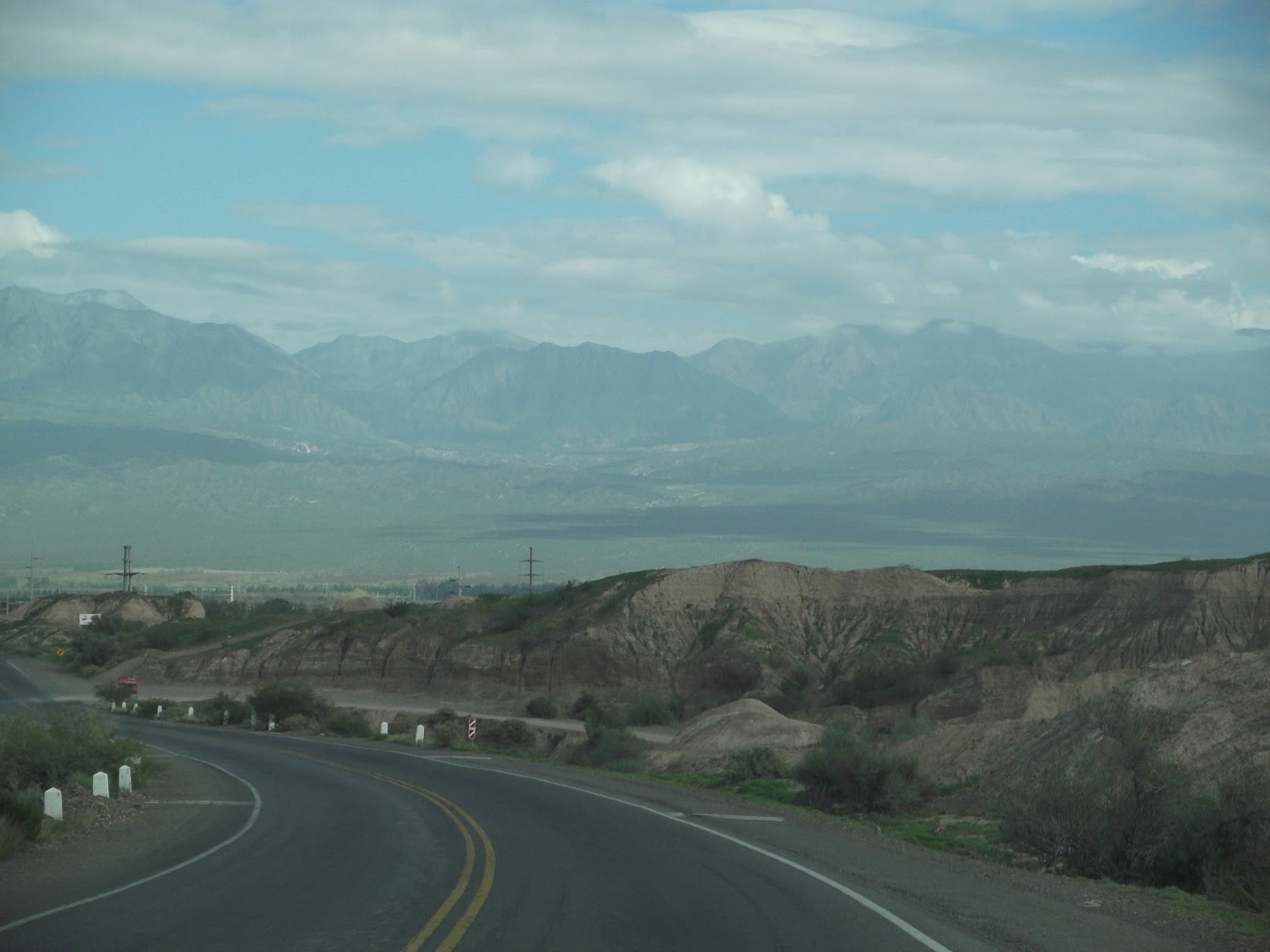
Sunday, March 30, 2014

A Road Trip to San Juan, Argentina: What Surprised Me Most

There aren’t enough words to describe how awesome the province of San Juan is with its majestic mountains, beautiful scenery, farmland, capital city, history, and so much more.

Argentina
On Tuesday, March 25th, my folks and I drove from Cordoba to San Juan for a much needed break. The seven hour journey began with a drive through the urbanized city district and then through Carlos Paz. We encountered several police checkpoints along the way, each designed to screw people with hefty fines if they were caught without their seat belts or if they didn’t have their headlights on. Having your headlights on is a huge deal when driving across Argentina. You can actually get a ticket for having your headlights on when you shouldn't or vice versa.

This was the first time I’d actually driven since I left the States. I avoided driving in Cordoba because everyone here swerves, drives in between lanes, and ignore stop signs, and red lights. My parents had actually bought me a new car before I moved to Argentina and they hoped that I would start driving it, but I told them, “NO WAY!” One of the reasons I had originally moved from Florida to New York was because I didn’t want to worry about having to drive ever again. Like in New York, I rely on public transportation in Cordoba, but I have to admit that I actually enjoyed getting behind the wheel of a car again.
La Rioja, Argentina
On the outskirts of Cordoba is the entrance to the province of “La Rioja”. At this stage in the journey, all we saw was a road and a lot of wild country. On occasion, we noticed a few random homes, some seemingly made of clay or red bricks, and not in the best conditions.
La Rioja, Argentina
The road we traveled on had small and large crevices that made driving a bit more difficult. So for the next two and a half hours, we swerved to avoid these crevices to avoid damaging the shock absorbers and wheels.
Argentina
We stopped at the next town called “Chepes” to refuel and to eat some lunch. We sat at a plaza and had some “milanesa” (breaded steak) sandwiches before heading back on the road.
As we approached the very edges of the province of San Juan, the landscape turned a bit desert-like. The heat was really strong and there was no sign of civilization for several miles. There was however some beautiful scenery along the way. 
ArgentinaArgentina
Then all of a sudden, we were forced to take an alternate route because the original road had collapsed due to erosion caused by flooding. This was breathtaking and in a weird way, very interesting to see.
ArgentinaArgentina
A couple of hours later, we drove through a small town called “Vallecito”, which many people consider “holy”.
Vallecito, ArgentinaVallecito, Argentina
This is where the shrine of the “Difunta Correa” is located. Many people go there to ask the “Difunta Correa” for favors and it is believed that once she honors the worshipper’s request, they must return and pay tribute to her in this shrine. I'll admit, I probably should have asked for a couple of things like a full-time job, but I've always been a skeptic when it comes to these things.
Vallecito, ArgentinaVallecito, Argentina
Vallecito, Argentina
People pay tribute here in different ways. For example, if you’ve had an accident and survived it, you place your vehicle tags on the path leading up to the shrine. Some also place recreated miniature versions of the home or business that they asked the “Difunta Correa” to help turn into a reality or prevent the owner from losing. Others buy a plaque thanking this sacred saint. There’s also a small gift shop in the style of an American flea market for people to buy souvenirs of San Juan and the “Difunta Correa.”

Argentina
A few hours later, we got close to the end of our journey. The mountains, trees, and shrubs had been replaced by modern day civilization. At first, all we saw were crops full of olives and grapevines. San Juan is known for their wine industry so this didn't surprise me.
San Juan, Argentina
By the time we got to the hotel, we were exhausted. The trip from Cordoba to San Juan took about 7 and a half hours. Shortly after we arrived, we had some tea and took a nap. Afterwards we ordered a pizza and then went to bed … again.
The next morning, we drove to see the mountains in Las Tapias (still located in San Juan).  These mountains were beautiful and so was the scenery on the horizon
Las Tapias in San Juan, ArgentinaLas Tapias in San Juan, Argentina
At times there seemed to be layers of towns and mountains sandwiched together up to the very sky itself! I’d never seen anything so beautiful in my entire life. But some areas seemed worthy of The X-Files.
San Juan, Argentina
One of the things I noticed was that there were quite a few signs on the mountains that depicted flying saucers and aliens. I learned that a lot of folks come from different provinces to the mountain regions in search of UFO encounters.
After we were done sightseeing, we started to develop an appetite, so we headed back toward the capital city of San Juan. By capital, I’m referring to the city district of the province, and not the capital of Argentina.

San Juan, ArgentinaSan Juan, Argentina
San Juan, Argentina
San Juan, ArgentinaSan Juan, Argentina
The homes, the sidewalks, and streets are a lot cleaner than in Cordoba and there doesn’t seem to be a lot of graffiti on the wall. People were quite friendly and respectful of others, especially in traffic. This in itself is quite different from Cordoba City.
San Juan, Argentina
We ate lunch at a restaurant called “La Remolacha”, which literally translates to the name of the vegetable we call beets. My parents ordered an Argentine asado. My dad in particular is obsessed with these. I ordered lasagna because I’m not much of a meat eater. While we waited for our food we had some empanadas as appetizers.

La Remolacha in San Juan, ArgentinaLa Remolacha in San Juan, Argentina
The food, in my opinion, was unremarkable. In fact, yo can pretty much get the same menu at any Argentine restaurant. However, it did satiate our hunger.

Afterwards we started walking around downtown. It’s quite similar to the downtown district in Cordoba City actually.
San Juan, Argentina
The only difference besides the clean sidewalks is the fact that San Juan observes the “siesta”, the rest period where everything shuts down, and businesses don’t resume until 5 p.m. Cordoba’s downtown district does not observe the “Siesta”.  
San Juan, ArgentinaSan Juan, Argentina
San Juan, Argentina
San Juan, Argentina
Despite the lack of activity, we took some photos of the nearby plazas before heading back to the hotel. We were so exhausted that we went to sleep early.
San Juan, Argentina
The next morning we got up at 6 a.m. and headed back to Cordoba City. Although the scenery was unforgettable, the city of San Juan was unremarkable. Despite this, it was a wonderful experience.
San Juan, Argentina
Below is a video I made of clips I shot during my trip to San Juan. Please enjoy, comment, and share.

Saturday, March 22, 2014

Passing by the Skin of My Teeth at the UNC

Friday, March 21st, 2014 brought a huge victory for me, but I’m getting ahead of myself. Let me take you back to February 3rd, 2014.

It was my first day as a student at the psychology school at the National University of Córdoba (UNC). I didn’t know a single soul, and yet the place was more crowded than a Ricky Martin concert.

Two and a half weeks later, I took and passed my first exam with a grade of 4, which, suffice it to say, is the kind of score you get when you’ve passed by the skin of your teeth. Still, I gave myself credit because it’s not easy to read, study, and truly understand an academic textbook written in a language I’m not used to reading.

Yes, I’m American, but I’m also Latino who was raised in the States for most of my life and have been immersed in English since before I was five. Because of that, my reading and writing skills in Spanish are extremely rusty. I've found that to be the case for a lot of us hyphenated Americans (as some racists like to call us).

A week and a half later, we had to turn in a term paper. The other two people in my group helped me with parts of it, and I ended up getting a 7, which at the university is equivalent to a B in the U.S.

Two weeks after that, I took the second test. Some would consider it the final exam for the term if you scored a 7 or higher on both the first and second exams. Unfortunately, I got a 2, and you need at least a 4 to begin what’s considered year one of the psychology degree program. I was obviously bummed because I had worked my butt off studying for hours on end.

Fortunately, I was given a second chance to make up the test with the lowest score. I crammed for the exam and took it again two days later. After 48 grueling hours of waiting, very impatiently, I finally got my result.

It was a 4.

With a 4 on the first exam, a 4 on the second, and a 7 on the term paper, I’m now officially able to enroll in all first year psychology courses beginning April 1st. As an added bonus, I also get a student bus pass, a lunch card that lets me eat at the university cafeteria for practically nothing, and access to the campus gym. I can check out books from the library, and I now have dental and other health benefits as well.

Because I scored a 4 on both exams instead of a 7 on each, I still have to take a final exam for the pre college course I just completed and pass it before the end of the year. I get six chances throughout the year to retake this exam until I pass. It essentially combines the material from the first and second exams. If I don’t pass it, I won’t be able to take the final exams for my first year psychology courses at the end of the year.

What this means is that I still have a lot of work ahead of me. In addition to my regular course load, I’ll also need to prepare for that final exam to make sure all of my other coursework counts.

Now, what would have happened if I hadn’t gotten a 4 on the second exam? I wouldn’t have been able to register for any courses other than a non intensive version of the pre college course I just finished. That would have set me back an entire year, which at 36 is a significant loss.

All in all, I think I did really well. On top of that, I’ve met some incredible people along the way. The folks below are those people.

I have two weeks before the new term starts, and I plan to enjoy every single moment of that free time. In fact, I’ll be taking a trip to the province of San Juan very soon, and I’m really hoping this place lives up to the expectations. 

As soon as I get back, I’ll be updating the blog with photos and videos from the trip, along with whatever stories come out of it.

For now, though, I’m taking a moment to appreciate how far I’ve come. Not everything has gone as smoothly as I would have wanted, but I pushed through and made it to the next step.

Saturday, March 8, 2014

Is Bullying Taken Seriously in Argentina?

We had a guest speaker in my psychology class this week to talk about his work as an educational psychologist. His name is Ezekiel, but I’ll call him Zeke. I was convinced that I was going to learn a lot from him. Sadly, I was right. Not because it was insightful, but because it was shocking and disappointing.

One of the first things I learned is that not every private or public school here has a counselor like they do in the United States. According to Zeke, many schools don’t feel an educational psychologist is important and, in some cases, see the role as an unnecessary expense.

WHAT?????

Since when is a child’s psychological well-being considered optional?

The conversation took a turn when Zeke brought up bullying. He argued that it has been overly publicized as a modern threat, when in reality it has always existed and is not as serious as people make it out to be.

That perspective caught me off guard.

From what I’ve observed, name calling in Argentina is often treated casually. This isn’t limited to kids or teenagers. It cuts across all ages and genders. At times, it even carries a racial undertone. For example, while I was waiting for the bus, one student called another “Chileno.” The student, who wasn’t even from Chile, was clearly offended and reacted angrily. There seems to be a strong underlying tension toward Chileans, though I can’t fully explain why.

I experienced something similar in class a few weeks ago, too. A professor mentioned how an American psychologist once claimed that their investigative method should be the standard for all psychological research. A student sitting behind me shouted, “typical Americans thinking they are better than everyone else.” Whether he realized it or not, the comment was directed at me. Or maybe he just didn’t care.

Beyond verbal remarks, I’ve also heard of more severe forms of bullying in Argentina. In some public schools, girls who are considered too pretty have reportedly been attacked and had their faces cut. While the forms of abuse may differ between Argentina and the U.S., the targets are often the same. Kids are singled out for being too smart or not smart enough, too attractive or not attractive enough, rich or poor, gay or straight, dark skinned or light skinned.

Thinking back to Zeke’s comments, one moment during the discussion stood out. A classmate shared her daughter’s experience with bullying. It had gotten so bad that her daughter had to change schools three times. To me, this sounded like a clear failure of the system. Without proper support in schools, families are left to deal with these situations on their own. Yet most people in the class seemed to believe the issue was the girl, not the bullies.

The mother then asked Zeke why therapists tend to focus on the victim rather than the bully. It was a fair question. After all, moving a child from school to school does not solve the underlying problem if the behavior itself is never addressed.

Zeke responded that, from a psychological standpoint, it is simply easier to work with the victim than with the aggressor. The mother disagreed, but when she tried to push the point further, he shut the conversation down and shifted to something else entirely. That, more than anything, was a grim eye-opener.

If this mindset is common among educational psychologists here, it raises serious concerns. The United States has already seen the long term consequences of failing to address bullying properly. Some students have taken their own lives. Others avoid school altogether. Many carry the emotional damage into adulthood in the form of anxiety, depression, or deep social isolation. In extreme cases, some have lashed out violently, not just at their bullies, but at entire schools.

The reality is that even the most resilient person has a breaking point. When that line is crossed, the outcome can be unpredictable and devastating.

Bullying has been recognized as a serious issue in the United States for decades. In Argentina, it may not yet be treated with the same urgency, but the signs are there. Ignoring it doesn't make it harmless.

If anything, it allows the problem to grow.

Bullying should never be seen as trivial. And if attitudes like Zeke’s reflect a broader perspective, then the real risk is not just what is happening now, but what could happen next.

Saturday, February 22, 2014

My First Midterm Abroad: Chaos at an Argentine University

The past two and a half weeks have been a tough adjustment as I acclimate to college life abroad, but I think I’m starting to get the hang of it.

I was really worried about having to absorb so much complex information about the history of the National University of Cordoba and the history of psychology in general. We also had the first major exam of the term this past Wednesday, and it turned out to be a rather chaotic experience.

We were all supposed to take the test in a computer lab at different scheduled times throughout the day. Unfortunately, many students did not stick to their assigned times and instead chose to take the test in the evening. This created a massive backlog of students who still needed to take the exam. The problem was that the computer lab was only open until 9 p.m.

Universidad Nacional de Cordoba
I was scheduled to take the test at 7 p.m., but I decided to go 40 minutes early because, if my American upbringing has taught me anything, it’s that it’s better to be early than late. Well, it was a good thing I arrived early because the line was incredibly long.
Universidad Nacional de Cordoba
There must have been a thousand students waiting to take the exam. I’m not exaggerating. After all, there were approximately 3,000 first year students registered in the psychology program in 2014.
Universidad Nacional de Cordoba

By this point, it was almost 9 p.m., and I was getting frustrated. Fortunately, Zach, my ex but forever my best friend, stood in line with me for emotional support.

Then a professor came out and told everyone in line that the computer lab was closed and that we would be taking a written, not computerized, version of the test in a classroom. 

F*cking A!

Universidad Nacional de Cordoba

Before the written exam began, the professor explained that the delay was caused by a number of students who had taken photos of their computer screens during the exam and posted them online in one of the Facebook groups for the psychology program.

Apparently, the professors learned about this around 2 p.m. and shut down the computer lab for about an hour and a half in order to change the questions so that students who had not yet taken the test could not cheat.

With that situation explained, we began taking the test in a non climate controlled (SUPER F*KING HOT) classroom filled with hundreds of noisy students. It was chaos, but despite the stress, I think I retained a reasonable amount of information from my study sessions, as I understood most of the questions. I finished within twenty minutes.

Just as I was about to leave, the lights started flickering, leaving several of my classmates in two separate classrooms without power.

Not surprisingly, the students were furious, and I hope this forces the university to rethink its strategy for administering exams in the future.

Next came the part where we were supposed to receive our results, but that did not actually happen. Those who took the computerized test received their grades immediately, while those of us who took the written version had to wait a few days.

The grading system in Argentina is different from the one in the United States. In the U.S., students are generally graded with the following system:

A – Excellent
B – Good
C – Satisfactory
D – Unsatisfactory
F – Failed

In Argentina, however, the grading scale uses numbers from 1 to 10. To remain in the program, you must earn at least a 4. To move on to the next term, you need a minimum of 7.

When I got home after the test, Zach and I bought a pizza, some ice cream, some cider, which is similar to champagne but cheaper, and some Coke, the soft drink, not the drug. We celebrated the fact that I had made it through the stress of the exam, and it turns out that celebration was justified.

I was expecting to receive my results on Monday, but when I went to class on Friday, I got the surprise of my life and was told that the results were available right then and there.

It turns out that I got a 4, which I admit is not bad considering how many years I have been out of school and the fact that this is my first time seriously applying myself in an academic environment that uses a language I am not fully accustomed to.

Universidad Nacional de Cordoba

So I passed the first test with a 4, but I did not get the 7 I needed. So what happens next? In order to pass the term, I need to take a make up exam for the first test and also earn a 7 on the second exam, which is coming up in about two and a half weeks. It is important that I reach that score on both exams in order to move on to the next semester.

Otherwise, I will have to continue taking a cumulative exam that covers the material from both tests throughout the year until I achieve the required score. This could potentially set me back an entire year, so I know I will have to study harder if I want to pass.

I am not going to lie. I really dislike the way universities here operate. Everything feels sloppy and disorganized, and at times it seems as though the administration and professors expect students to fail. I am still not sure if this university is right for me, but I am going to stick it out for a while and see how things go.


Saturday, February 8, 2014

College Life – Week One: Culture Shock Strikes Again

For those of you who’ve been following my blog, enrolling at the public university in Córdoba has been a challenge. Luckily, I got in late last year and officially enrolled for the 2014 school year. The first order of business as a student was a get-together organized by the Psychology Department at the National University of Córdoba (UNC) on Friday, January 31st.
Universidad Nacional de Cordoba

By now, most of you know that I suffer from social anxiety, which makes me act really f*cking awkward during social gatherings. In the past, it got so bad that I didn’t even want to leave the house. Fortunately, I’ve been able to manage it with anti-anxiety medication and the free therapy I’ve received at the public hospital here in Cordoba City.

Even with the meds, I knew I’d feel anxious on my first day of college. Still, I decided to go to the get-together to meet some of my peers. I was hoping to make a friend or two so that when classes started, I’d recognize a few friendly faces. The problem was, it didn’t turn out the way I expected.

Universidad Nacional de Cordoba

For starters, everyone was between the ages of 16 and 23. That alone made it difficult to relate to anyone, since I’m 36 and, honestly, an old soul. Teenagers and young adults in Argentina tend to come across as pretty innocent. By innocent, I don’t mean they’re not prone to excessive drinking, drug use, or even crime in some cases. I mean they’re at that stage in life where they’re still a bit naïve, where the world feels like “Neverland,” with little to no worries.

Oh, how I envy the blindness of youth.

Another factor that made it difficult to connect with my peers was that they were all Argentine. They grew up here and had experiences I simply don’t understand because I wasn’t raised in this country. Trying to share my own experiences felt almost pointless. At best, I got blank stares, and at one point, a smart-aleck remark.

Then there was the slang. The way young adults speak here made it hard for me to follow conversations. Like any culture, Argentines have their own jokes, stories, and creative curse words that I’m not familiar with. Most of the time, I felt completely out of the loop.

The final obstacle I ran into was the mentality of some of the students, and later, even some of the professors. I’ll give you an example. We’re all part of a Facebook group for the 2014 psychology students. Apparently, one student posted a photo of himself relaxing by a pool, barefoot. At the get-together, another student brought it up and started calling him a son-of-a-b*tch for showing off that he has a pool while everyone else is melting in this infernal heat. And no, he wasn’t joking.

From what I’ve seen, a lot of people here seem to be pretty envious of others who have more than they do. To be fair, we’re all a little prone to envy. Hell, I’ve had my moments too. But some of these Argentines seem to take it to another level.

By the time the get-together ended, everyone decided to walk to a nearby restaurant close to campus. I’ll admit, I fully intended to go with them. I even walked behind the group for about ten minutes. Then it hit me that I was the only one no one was talking to. I was alone. Same as always. F*ck. I couldn’t imagine things getting any less awkward once we got to the restaurant, so I turned around and headed for the bus stop. And trust me, no one even looked back long enough to notice I was gone.

I wonder if this is how a ghost feels.

Universidad Nacional de Cordoba

Then came Monday, February 3rd, the first official day of the university’s school year, and it was complete chaos.

There were so many students trying to get into the class that they had to relocate everyone to a larger classroom.

Universidad Nacional de Cordoba
Once we were all settled, a professor walked onto the stage and explained what we could expect from the psychology program. Then a group of students from the CEP, which is basically a student-run activities and advisory group, came by to talk about their experiences at the university. Some of them also started pushing their political agendas, which I’ll get into more in a moment.
Universidad Nacional de Cordoba
Classes at the university are divided into two categories: práctico and teórico. Don’t worry, I’ll explain the difference.
Universidad Nacional de Cordoba

Práctico classes are held on Mondays, Wednesdays, and Fridays, and take place in a typical classroom setting with about 30 to 35 students. The professor goes over the textbook material and assigns homework and other tasks. During these classes, we’re placed into groups of four or five to encourage interaction. Blah. I hate that so much.

Attendance for Práctico classes is mandatory. Unfortunately, my first one didn’t start until Wednesday, February 5th.

Universidad Nacional de Cordoba

On Tuesday, February 4th, we went to an auditorium known as “El Rectorado.” This is where we attend classes on Tuesdays and Thursdays. These are called “Teórico” classes, which basically means they’re lectures.

In these sessions, you just listen to the professor discuss the subject for about two hours and then head home. Attendance isn’t mandatory for Teórico classes, but it’s strongly encouraged since we only get about two and a half weeks before the first midterm exam, known as a “Parcial.”

Teóricos tend to get packed with students, and space is already limited, so we’re encouraged to arrive at the auditorium about an hour before the doors even open. Otherwise you're royally screwed.

Universidad Nacional de Cordoba
The textbook itself is over 400 pages long and covers the politics behind the development of Argentina’s free public higher education system, as well as the history of psychology. I have to admit, even with study groups, I’m finding it really difficult to understand the material.
Universidad Nacional de Cordoba

The truth is, I’ve never really read books in Spanish. I never had to. If you came to my house, every single book and magazine I own would be in English. Even though I can speak Spanish well enough, my reading and writing skills are still pretty basic, and that’s about it.

Trying to read and understand a textbook written in Castilian Spanish has been a major brain teaser. As I worked through it, word for word, sentence by sentence, paragraph by paragraph, it felt like my mind was sinking into quicksand.

Universidad Nacional de Cordoba

By Wednesday, Thursday, and Friday, I pretty much had a clear idea of what to expect for the next five years. During the Teórico classes, both the professor and guest lecturers talked about the history and political struggles that shaped the National University of Córdoba. But they also repeatedly criticized how the current economic and political crisis in Argentina is the result of the current president’s regime.

Personally, I hate politics. Still, a lot of the points they made go against everything I believe in. For example, they seem determined to prevent government regulations and sanctions from affecting the university. They encourage students to form these university-style governing bodies where everyone votes. Representatives even come into class at the beginning of lectures to try to sway us to their cause.

This isn’t like student council back in middle school, high school, or college in the States, where it was about organizing a pep rally or a bake sale for a good cause. Here, it feels much more intense. One student representative at UNC openly attacked the Argentine president’s handling of the economy, claiming she cares more about large corporations than small businesses or the Argentine people. She also went after international companies like Chevron and Monsanto. To be fair, Monsanto has been accused of environmental contamination in certain regions, and that part I do understand.

Some of these views seem to stem from the xenophobia that exists in Argentina, along with what I see as an unfounded fear of colonization by countries like the U.K. or the U.S.

I personally support policies that allow large corporations to succeed, because their growth can create jobs and help industrialize the country further. I’m also a strong proponent of international companies operating in Argentina, since they bring jobs, money, and global exposure. But that’s not a perspective I see shared very often here.

And honestly, the entire world is dealing with economic problems right now, including the U.S. It feels short-sighted for Argentines to assume that Argentina’s situation exists in a vacuum or is solely the result of one administration.

This is where I start to feel like the odd one out, because I just don’t see things the way my peers do. There’s free healthcare, free higher education, access to food, and relative peace and quiet most of the time. There are also no mandatory national taxes, only provincial and municipal ones, which are manageable with a steady job. Not many countries can offer all of that.

To me, constant agitation and calls for insurgency just create more problems. But the university environment seems to encourage that kind of mindset, when it should be focusing on education.

I’ve been in Argentina for almost two years now, and I thought I had gotten past the culture shock. But after my first week as a psychology student, it feels like I’m going through it all over again.

I realize that my point of view may offend some Argentines, and that’s not my intention. I’m simply sharing my personal experience as an expat, which is what this blog has always been about. At the end of the day, this is just one perspective, shaped by my own background, experiences, and struggles adjusting to what is obviously a completely different world.

Tuesday, January 28, 2014

Expat Report: Month 20 – Heat, Blackouts, and New Beginnings

The clock is ticking—soon enough, I’ll be officially starting college here in Argentina!
Cordoba, Argentina
This summer has been pretty stressful. On top of dealing with a swarm of insects trying to invade my home, I’ve also had to deal with constant water pressure problems and frequent power outages. Both of these are pretty common around here. This is my second summer in Argentina, so I knew what to expect—but that doesn’t make it any easier to handle.
Cordoba, Argentina

The heat index has been brutal, spiking as high as 40°C (104°F). There have been days when I couldn’t shower, wash dishes, or do laundry because the water pressure dropped to almost nothing. Aguas Cordobesas, the water company here in Córdoba, is utterly useless. I’ve requested several times for them to come by and check our water pressure, and they never showed up. Only after repeated complaints did they finally send someone, who then claimed there was nothing wrong with the water pressure. But that’s not the only utilities issue I’m dealing with.

To beat the heat, people crank up fans and air conditioners, which puts a huge strain on the power grid and causes intermittent blackouts across the province. Sadly, there’s not much I can do about that either.
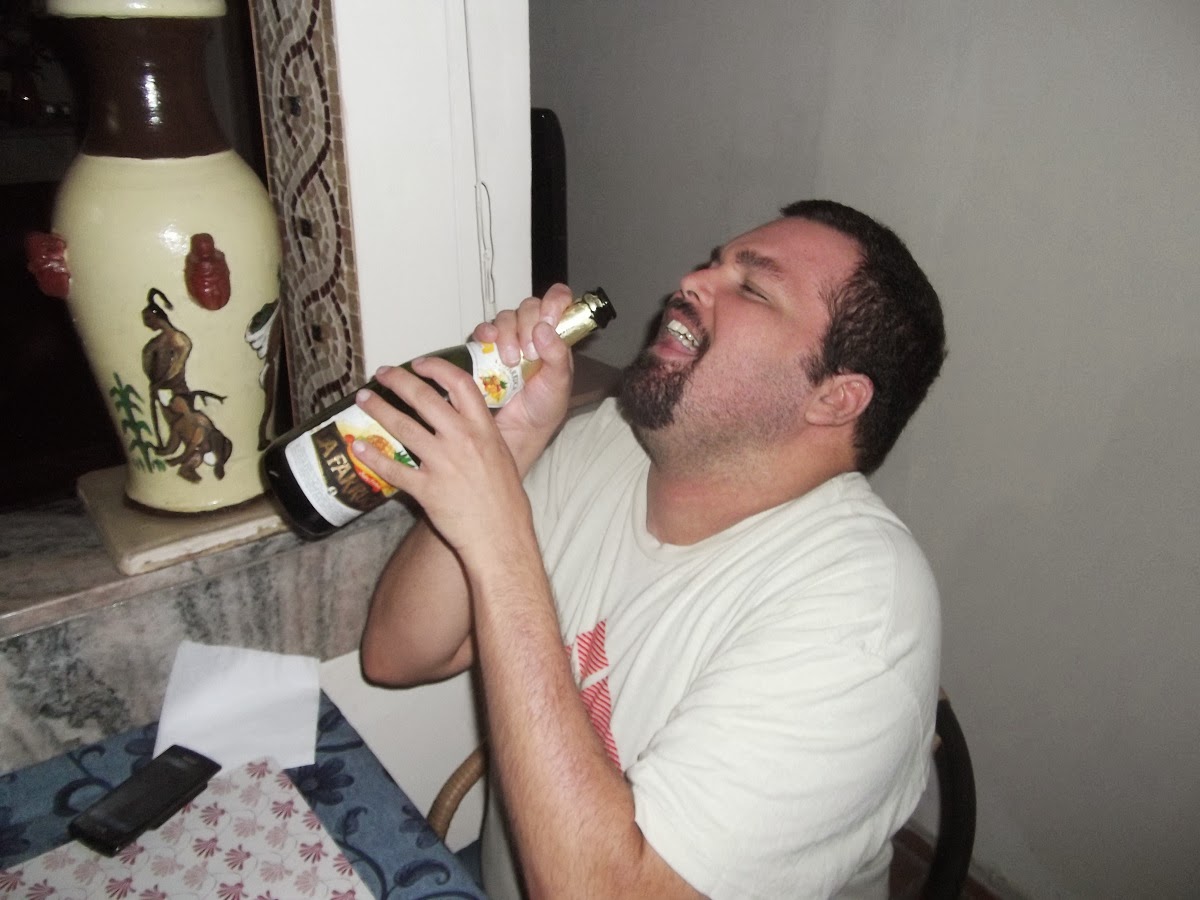
At least I have something to look forward to. The Argentine fall season is just a few months away, and it will bring some much-needed relief from this relentless heat. I also have to admit, I look way more stylish in winter clothes than in summer gear.

In the meantime, I’ve been keeping busy writing articles for my freelance job. I’ve also been socializing with Sarah-Claire, Rosalia, and their Whovian friends. Yes, my ex is still in the picture, but strictly as a friend.

I’ve also started exercising at home to complement the positive effects of my antidepressant and anti-anxiety meds. It might sound like a hectic schedule, but honestly, it’s nothing compared to what I’ll be facing next week when I start school at the National University of Córdoba (UNC). I’ll admit, I’m a little nervous, but also pretty excited.

Oh, and someone recently sent me a personal message through social media asking how I’m handling single life. Hmm… that’s a tough one. I can’t say I’m happy about it. I was in a committed relationship for twelve years, and that’s not something you just get over in a couple of weeks. I’ve had moments where I cry myself to sleep or question what I’m still doing in Argentina, since I only came here to give my ex the advantage of free healthcare and a better life. It kind of seems pointless to give a sh*t about that now that he dumped me.

That said, I’m trying to see the positive side. Now I have more time to focus on myself, which, I’ll admit, hasn’t happened much in my life so far.

So, what about my ex?

Well, getting a divorce while living abroad isn’t easy, so it’ll be a while before everything is finalized. But just because our marriage ended doesn’t mean our love for each other has completely fizzled out. We still care about each other… in our own way. Right now, we’re slowly learning how to live our individual lives while sharing the same roof.

I feel like I’ve been reborn, and like any newborn, I’m learning how to live life all over again, one step at a time.

Wednesday, January 1, 2014

Celebrating New Year 2014 Abroad

2013 was a crazy year for me! With Zach’s help, I was able to get my U.S. education validated so I could enroll at the public university in Córdoba (UNC). We were also able to make Zach a permanent resident of Argentina, which was a huge relief for us. I started going to therapy at the public hospital, where they provided me with medication to help manage my social anxiety and depression.

I took two incredible trips to the capital city of Buenos Aires and had the chance to eat at T.G.I.F., Kentucky Fried Chicken, and Wendy’s. I boarded a train for the first time in Argentina, which was an experience in itself. I’ve made some amazing expat and Argentine friends, and I celebrated my second Thanksgiving since moving here—fortunately, this one was way better than last year’s. I also went on a diet and lost 8 kilos (about 17.5 pounds).

Of course, not everything was positive. I’ve had to deal with some pretty bad stuff too. I watched my relationship with my “cousins” turn toxic and emotionally abusive. I was also recently a victim of a judicial officer in Córdoba who came looking for a previous tenant. When I tried to prove I wasn’t the man he was looking for, he became irate, ripped my U.S. passport from my hand, shouted racial slurs about Americans, and threatened to arrest me. That, to say the least, was not fun at all.

However, the most painful change in my life has been having to end my marriage. Even though I saw it coming for months, I don’t think my heart was prepared for it. Worst of all, there aren’t too many moments where I’m okay—only moments that don’t hurt quite so much.

Lately, I’ve been reconsidering a lot of things. I’m thinking about giving my ex the house and getting my own apartment, but that’s going to cost money. As grateful as I am for the freelance writing job I get from my handler, Ben, the assignments don’t always come consistently. And not to crap all over Ben, but I get the feeling he’s been playing dumb about paying me on time on a few occasions. That’s okay. Once I secure a more stable job, I’ll definitely start saving up for a move.

I’m also considering waiting until I graduate from college before moving back to the States in about six years. It’s nothing personal against Argentina. I just don’t feel like I belong here. Who knows, I might change my mind once I actually start college.

Oh, and did I forget to mention that my folks threatened to throw us both out on the street a few weeks ago? Yeah. There was a lot of tension stemming from an argument about me not really liking Argentina and not wanting to stay here. Despite all that, Zach and I were still invited to their house for New Year’s Eve dinner.

My dad made goat, which I’m not a fan of, but he also added sausages, steak, and pork to the mix. It ended up being a really nice meal, and we took some wonderful pictures. This New Year’s Eve celebration was better than the last. At least this time, Zach was here with me, even though we weren’t a couple anymore.
Afterwards, we headed outside to watch the fireworks at the stroke of midnight, just like we had on Christmas Eve.
 
Then we headed back to the house and had some Sidra, which is like champagne, to toast to 2014. 
I’m not sure what 2014 will bring, but I’m hopeful for a new beginning, more money, more traveling, and more friends to add to the already amazing group I have, both here and in the U.S.
I’d like to wish a Happy New Year to all of my readers from around the world. Thanks to you, my blog has had over 15,000 hits, which isn't bad given that I started it a year and a half ago. You’re all amazing! Send me some hugs if you can, because I have a feeling I’m going to need them.