Saturday, August 17, 2013

Finding American Food in Argentine Supermarkets: An Expat’s Guide to Grocery Shopping in Córdoba

(CHECK OUT THE NOVEMBER 2021 UPDATE AT THE BOTTOM)
When I arrived in Argentina, I was afraid I might not ever find food products from the United States ever again, which honestly, scared the hell out of me! For expats, eating native meals can be an exciting experience, but that excitement can fade quickly. Before long, we start missing the foods we grew up with, even the snacks that aren't really healthy for us.  

If you’re new to Cordoba or are planning to move here, here are some items that you will find that may be familiar to you.  

 If you’re looking for Pringles, Doritos, Lays Potato Chips and those 3D Chips, you’re in luck. If you’re looking for Ruffle’s Potato Chips, you’re out of luck, at least in Cordoba, but you might find a generic brand equivalent that's semi-decent. 

They don’t have Ritz Cracker, or rather the brand name. They do however have REX which tastes somewhat similar to a Ritz Cracker, albeit smaller in size. 
Fruit Loops, Kellogg’s Corn Flakes, and Special K are available here. While most of the other brand name cereals (not mentioned) haven’t made it this far down, you will find similar substitutes with Argentine brand names. 
Traditional Quaker Oatmeal is also available.

Peanut butter, Mac & Cheese, Pretzels, Ginger Ale aren’t as easy to find. Your best bet is to check Wal-Mart or an international food distribution store for these items. Pictured above are the items as they appear in Argentina. 
Popcorn, regular butter, extra butter, and kettle corn are available as well.
Oreos are the only cookie brands I’ve seen from the States in Cordoba.
Philly Cheese Cream is extremely rare. I think I’ve only found it once at one of the local supermarkets. There are Argentine brands that will do just as nicely. Tholem is the brand I use. It doesn’t come in a rectangular box, but it does come in a tiny tub. It’s much creamier than the Philly Cheese Cream though. 
Cappuccinos are my guilty pleasure. Fortunately, you can buy some instant mix in Cordoba. Though if I’m feeling adventurous, I’ll go downtown to the local Starbucks and order myself one from there. 

There are all types of teas (regular, green, black, red, mint, fruit flavored, Earl Grey, etc.), as well as regular coffee and flavored coffee (vanilla, etc.).  
Ginger tea is tough to find, but not impossible. It’s called Gengibre in Spanish. You can also buy the root and boil it in a small pot to make Ginger Tea. 
Good hot dogs are difficult to get. In Argentina, most are skinless, grainy and disgusting. If you’re craving a hot dog, I recommend you buy the ones that say German (Aleman in Spanish) on the label. These will have skin on them and the quality is slightly better. 

If you’re looking for probiotic yogurts, then you have two options. You can buy Activia yogurt, which comes in either the traditional cups, or as liquid yogurt bags. You can also get probiotics from a brand called Yugorisimo. Probiotics are called provitalis in Spanish. 

Sauces and condiments are easy to come by here. You’ll find ketchup, mayo, barbecue sauce (called Barbacoa here), mustard (regular, honey). For the salads, you have ranch and Caesar dressing available as well. 

There are some sauces you might find useful if you’re from somewhere outside of the U.S., or are really craving an oriental dish. 

Asian sauces available are: Oyster Sauce, sweet and sour sauce (called Salsa Agridulce), and soy sauce.
German: Worcestershire Sauce

If you’re of Puerto Rican/Cuban descent or you simply love their food, you might be interested in knowing that the flavoring they use in their meals, Adobo, is available here, but it’s called Condimento para Pizza, which basically means Pizza condiments. Trust me, it’s Adobo. I know this because my husband is of Puerto Rican descent. 
The candies I’ve found in Cordoba so far are Skittles, Starburst, Nestle Crunch, M&Ms, Tic-Tacs, Ice Breakers, Milky Way and Snickers bars (rare but not impossible to find), and Ferrero Rocher. 

Drinks like Pepsi, Coca Cola, Tang, Tropicana Juice, and Gatorade are available. If you’re planning a party to celebrate a holiday, a birthday, or you’re simply a mega-alcoholic, you’ll find familiar brand names like Budweiser, Heineken and Absolut Vodka. 

Ice Tea isn’t well known in Argentina, but you’ll find that the brand, Fuze Tea (which comes in either lemon or peach flavor), is similar to Nestle’s Ice Tea and Snapple. 

If you have a busy life but not enough energy, don't worry! There's Red Bull in Argentina.
If you miss Taco Bell or are simply in the mood for a soft taco or burrito, you’re in luck. While this type of food is not in any way a part of Argentine culture, they do sell the soft discs needed to make a fajita wrap, burrito, or taco. 
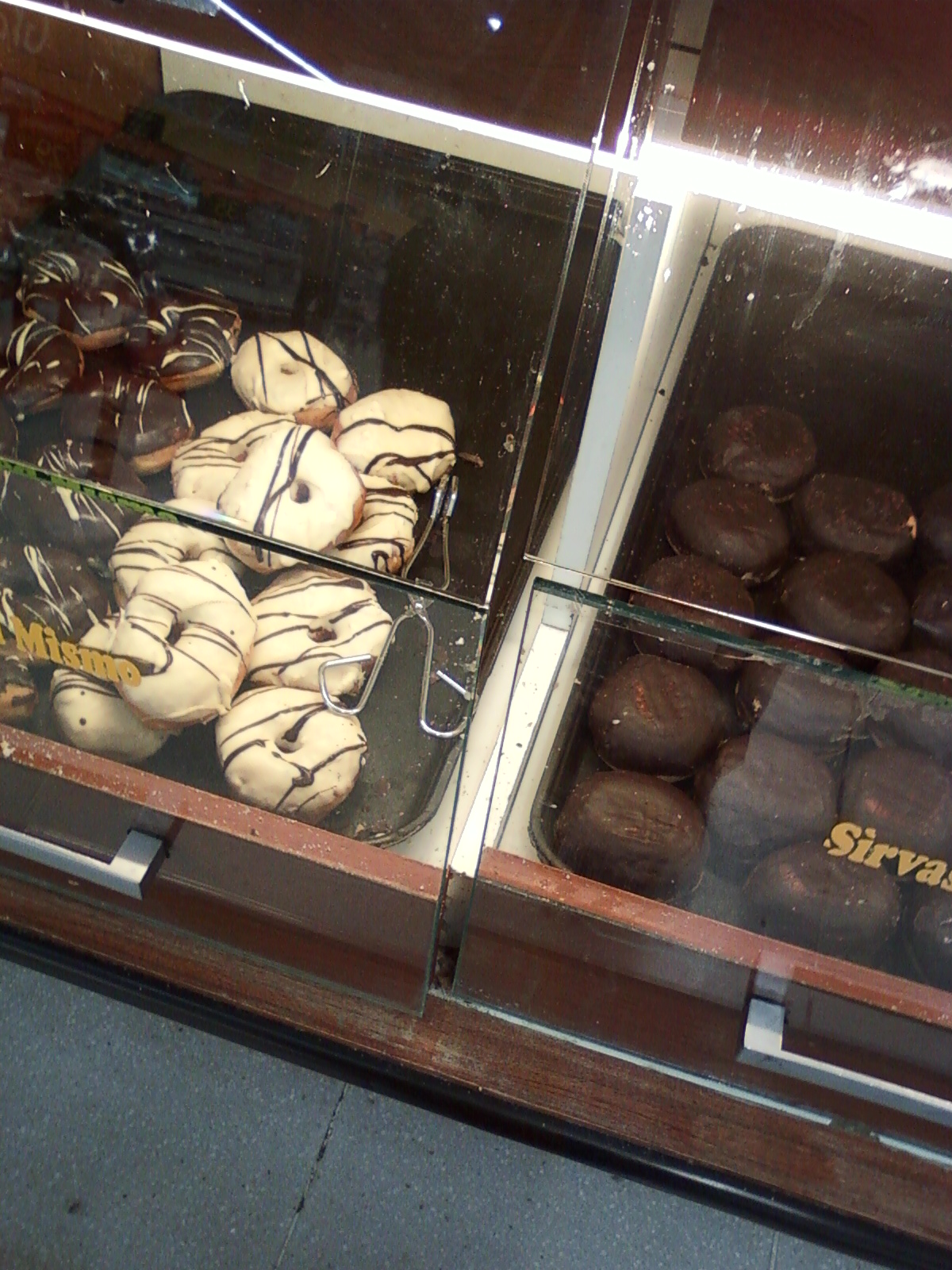
Finally, donuts! They’re rare, but not impossible to find in Cordoba. Your best bet is going to Wal-Mart. They’re not the best donuts in the world, but they’ll certainly satisfy the craving. But if you buy donuts from local bakeries, you might end up eating something that tastes really bland. Oh! Almost forgot, bagels are definitely available at Wal-Mart too, but are super rare.  

You can also find a few American and International food items in Falabella and Almacen de Mario in Cordoba. 

Good luck in your search! 

UPDATE November 2021
International Food Distributors and Restaurants in Cordoba City
Missing your favorite food items from home? Click the link and check out these international food distributors and restaurants in Cordoba City, Argentina.

Sunday, August 11, 2013

My First Time Voting in Argentina: An American Expat’s Experience

On Sunday, August 11th, 2013, I voted for the first time ever in Argentina. How did that happen? Well, as I’ve mentioned before, I was born here but moved to the United States when I was five. Over time, I went from being a U.S. resident to a U.S. citizen. Even so, I do consider myself 100% American. Not Argentine.

However, Argentine law requires all its citizens to vote, including Argentine-Americans like myself. There's no way around this. Believe me, I triple checked. The only exemptions are if you are over the age of 70, are hospitalized, or are living abroad. That’s fine because I plan to stay in Argentina for a few years, and whatever happens politically here will affect both my husband and myself. So, I wanted to add my voice — and I did.

When I arrived at my designated voting area, there was a major backup of cars on the narrow neighborhood streets. Voting can be chaotic back in the States too but Argentina has a habit of embracing chaos in ways I've never seen.

Cordoba, ArgentinaCordoba, Argentina

I headed into the building, which was a school, and walked up to the voting table assigned to me. How did I know which table to go to? There’s a website that lists your name, your voting location, and the specific table where you should check in. All you have to do is type in your DNI and the info pops up.

After I checked in, I was given an empty envelope and told to go into a room. At first, I was confused because I expected computerized ballots. The last U.S. election I voted in used those. I guess I jumped the gun with my expectations about the voting system here.

Inside, there was a table with flyers. Each flyer represented a political party. I already knew who I wanted to vote for since I’d done research before the election. So, I grabbed the flyer for my chosen party, folded it, and placed it inside the envelope.

Then I had to use spit to seal the envelope, which was pretty gross! I’d forgotten how nasty envelope glue tastes. Too bad I couldn’t just email my vote.

With the sealed envelope in hand, I left the room and headed back to the table. For a moment, I wasn’t sure what to do next, but the people there were kind and helpful.

I slipped my sealed voting envelope into the ballot box. Then I signed my name and received a voting slip. I have to keep this slip for six months until the voting records are updated to confirm that I voted.

Why is this slip so important? Like I said, voting is taken seriously in Argentina. If I want to apply for a credit card or even a job, I need to show proof that I voted. You can also be fined if you don’t vote.

I’d like to point out that if, for any reason, a voter doesn’t agree with any of the nominees, they can submit an empty envelope as their vote. However, the voter still has to show up in person on election day.

Now here's an interesting tidbit. It turns out that foreigners with permanent Argentine residency are able to vote in minor elections related to policy changes and  things like that. They just can't vote in presidential elections. On the plus side, voting is optional for non-citizens.

This election was a preliminary round to narrow down the candidates. I’ll vote again this October for whoever is left standing.

Cordoba, Argentina
Oh, and in case you’re wondering who I voted for… shhh! That’s a secret.

Saturday, August 3, 2013

Heading to and Through Carlos Paz, Argentina - Video Tour

Carlos Paz is this quiet little town nestled in the beautiful mountainous region of Cordoba province in Argentina. This was my second visit in the past year, and I wanted to share a special video tour of my journey through it.
In the video, I’ve captured some of the scenic car ride as I made my way through the town, which I hope you’ll enjoy! While the video gives you a glimpse of the area, there is one iconic landmark that’s missing—the famous Cuckoo Clock in the center of town. It’s definitely a must-see, so if you're curious, you can check it out here. 
Carlos Paz, Argentina
The photo above is from my first trip to Carlos Paz last year. I had intended to stop and get better footage of the lake and surrounding mountains, but unfortunately, the weather didn’t cooperate. Still, the town’s beauty shone through despite the cloudy skies, and I’m excited to share what I could capture.

For more photos and insights, you can read about my first trip to Carlos Paz here.

While I prefer the energy and excitement of the city, there’s something uniquely charming and peaceful about Carlos Paz that makes it worth visiting. Who knows? I might pop back for another look sometime in the future!

Monday, July 22, 2013

How Expensive Are Baby Items in Argentina?

Updated on November 26, 2024

Let’s say you’re planning to move to Argentina for work or to start a brand new life, but you have a baby or toddler. Should you bring baby furniture and essentials with you, or buy them in Argentina?

For the sake of simplicity, yes, it’s easier to buy baby furniture here. However, it can be quite expensive.

My spouse and I have been discussing adopting a child within the next three to four years. While I’m unsure about raising a child in Argentina, many potential expats have reached out to me with questions about this topic. So, I decided to research the cost of baby items in Córdoba. Here’s what I discovered.

A crib like this costs 675 Argentinian pesos at Walmart, which is roughly 123 US dollars.

 A high chair like this costs 399 Argentinian pesos, which is 73 US dollars.

A play pen costs 1,099 Argentinian pesos which is 201.24 US dollars.

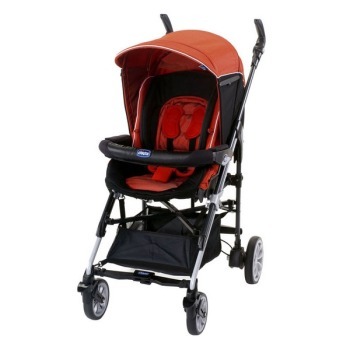
A stroller can cost anywhere from 1,000 to 3,000 Argentinian pesos, depending on the quality, which is between 183 to 549 US dollars.


Huggies Diapers can run you anywhere from 69 Argentinian Pesos to over a 100, depending on how many diapers come in a bag. In US dollars, this would be about 12.60 to 18.30 US dollars, perhaps a bit more.
A car seat will run you about 1,499 Argentinian pesos, which is about 274.36 in US dollars.
Pacifiers are as low as 25.90 in Argentinian pesos, which is the equivalent of 4.74 US dollars.
Baby bibs are 15.99 Argentinian pesos, which equals to 2.92 in US dollars.

Updated on November 26, 2024:

The prices of baby items have increased a ton due to inflation. So here’s an updated list of average prices for 2024, using the current exchange rate of 360 pesos per USD:

  • Crib: 50,000–100,000 pesos ($140–$280 USD)
  • High Chair: 30,000–50,000 pesos ($85–$140 USD)
  • Playpen: 75,000–120,000 pesos ($210–$335 USD)
  • Stroller: 90,000–200,000 pesos ($250–$555 USD)
  • Car Seat: 130,000–250,000 pesos ($360–$695 USD)
  • Diapers (Huggies): 4,500–9,000 pesos ($12.50–$25 USD) for a pack
  • Pacifiers: 1,000–2,000 pesos ($3–$6 USD)
  • Baby Bibs: 800–1,500 pesos ($2.20–$4.20 USD)

You can look for cheaper items on MercadoLibre, aka Latin America’s version of eBay. However, as with any marketplace, the quality may not be up to par.

Healthcare for Babies in Argentina

When it comes to your child’s health, Argentina offers a significant advantage: free public healthcare. This applies to everyone, whether you’re a resident or a foreigner.

In case of an emergency, you can visit the emergency room (sala de urgencia) at a public hospital, where your child can get any necessary medical care at no cost. This includes vaccinations and basic treatments, which is a major relief for families on a budget.

Updated on November 26, 2024: Argentina’s free public healthcare system remains a reliable option, but waiting times in public hospitals have increased because of higher number of patients. Many expats now opt for private health insurance, which costs around $80–$150 USD per month for a child, providing access to private clinics with shorter wait times and a bit more personalized care.

Wednesday, July 10, 2013

Cordoba Neighborhoods in Argentina - Video Tour

I celebrated my 36th birthday on July 9th, so I figured I'd go out on a mini shopping spree and splurge on myself. Then I thought, as long as I'm out and about, why not film a few video clips of Cordoba's neighborhoods, so that my readers could get a glimpse of what homes are like down here. 
Watch the video!

I apologize in advance for the shakiness of the camera, and also for being so self-centered that I posted two photos of myself on my birthday 🙂 

Enjoy the video! 
A boy's never too old to celebrate by shopping ;-)

Monday, July 1, 2013

Argentine Product Pricing Comparison 2013

One thing that often surprises tourists and expats when they arrive in Argentina is the prices. While some items are relatively cheap, others, like toys and electronics are a bit more expensive. This would explain why I haven't seen a Toys R Us around here. It probably wouldn't make any money from locals.

I was honestly floored by the prices during my first few weeks here, but after doing the conversion from Argentine pesos to U.S. dollars, I realized other items, such as food, are actually very affordable. 

The price conversion you see in this entry are based on the Argentine peso vs U.S. dollar ratio as of July 1st, 2013. I'm just pointing this out because everyone tells me that the economy goes up and down like a see-saw all the time. So I can't guarantee that these will be the same prices a year from now.

So, here are a few items I took photos of when I was at the market. Take a look for yourself, and let me know what you think. I'll be monitoring the prices and posting updated comparisons over the next few years.
Trix Cereal = 26.75 Argentine Pesos = 4.97 USD
Ham and Cheese Sandwich – 46.90 Argentine Pesos = 8.71 USD

Power Rangers Action Figure = 369.00 Argentine Pesos = 68.52 USD

Doll House Sets – 320.00 Argentine Pesos = 59.42 USD

Hello Kitty – 189.00 Argentine Pesos = 35.00 USD

Ben 10 Book Bag – 409.00 Argentine Pesos = 75.95 USD

Board Game – 329.00 Argentine Pesos = 61.00 USD


 84.90 Argentine Pesos = 15.74 USD


 1,099 Argentine Pesos = 203.71 USD