Wednesday, July 27, 2016

Heading To Buenos Aires 2016: Part 2 - The Japanese Garden

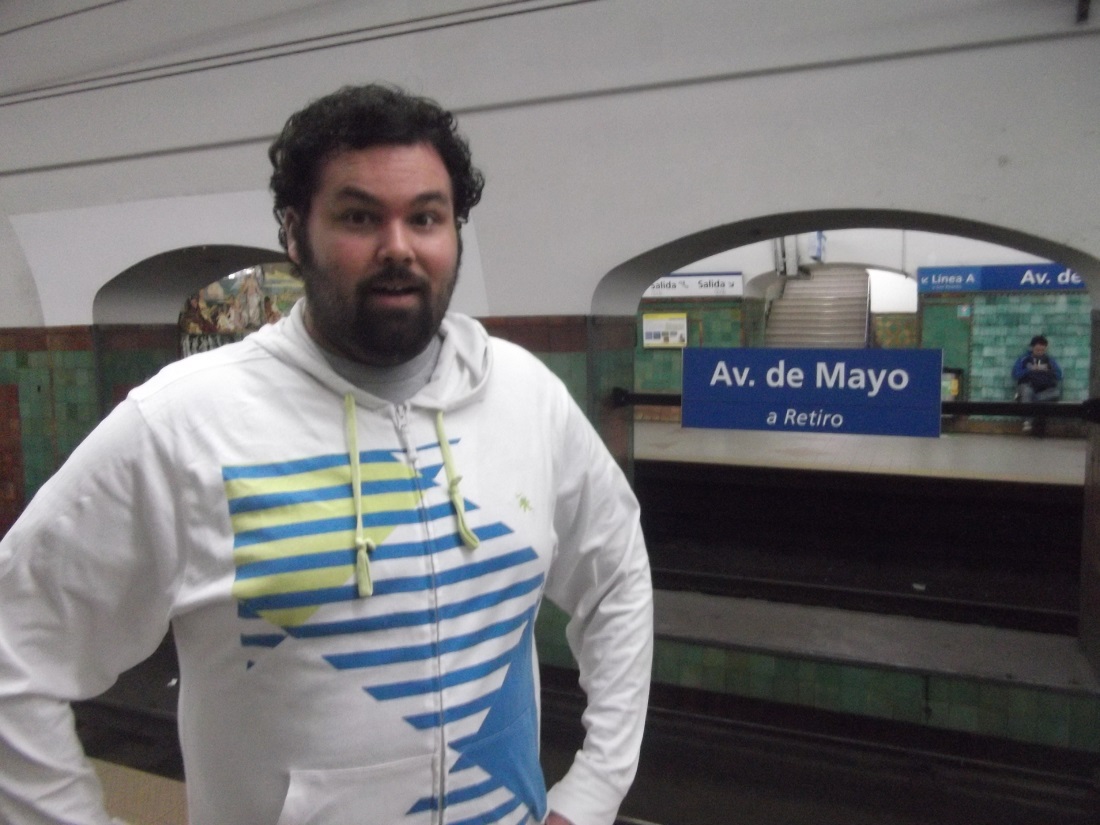
So on our second day in Buenos Aires, we decided to give the subway system a try. To our surprise, it's not that much different from the subway system in NYC. It costs 4.50 Argentine pesos (3 U.S. cents. Yes! You read that right... cents!), which is over 50 percent cheaper than taking a bus in Cordoba.
The Subway
The only noticeable difference about the subways here is that they have this passageway between the subway cars. In New York, the doors had to remain close. Of course that never stopped people from opening the doors and crossing over to the next car while the subway train was moving.
In New York, you took a different number or letter train to reach a different destination in the city. We assumed the same philosophy was true in B.A. Boy, were we wrong!
It turns out that if you get on the A line terminal (emphasis on the word terminal) and wait for your train there, you'll see all kinds of number and letter trains passing by, and they all go to the same destination. Essentially, it's not the designation of the train that determines where you'll end up, but rather the terminal that you're standing on. So we ended up waiting for 2 hours as tons of trains passed by. We were looking for the seemingly elusive A train that never seemed to arrive. Then we asked a few people and one of the kind locals cleared things up for us.

Heading To Wendy's
So after we figured out the whole subway system out, we ended up going to the Alto Palermo Mall where they have a Wendy's and a KFC. We were also going there because we knew they had a T.G.I.F.
When we got there, the T.G.I.F. had been replaced by a NIKE store. Had they gotten rid of Wendy's and KFC too?
Thankfully no.
We went to Wendy's because I was tempted by the Chili burger that they had advertised on the front of the restaurant. Unfortunately,  the reality was a lot more disappointing. It looked like someone place a spoon of baby diarrhea on top of my burger. Where were the beans? While it certainly didn't taste like Chili, it was still delicious.
Zach had a chicken Caesar salad with his burger. It looked real good too. I almost wished I'd ordered one, but I was full.

Afterwards, we decided to head to our intended target: the Japanese Garden. The streets and buildings along the way were taller, cleaner and lovelier than those we often see in our host city.
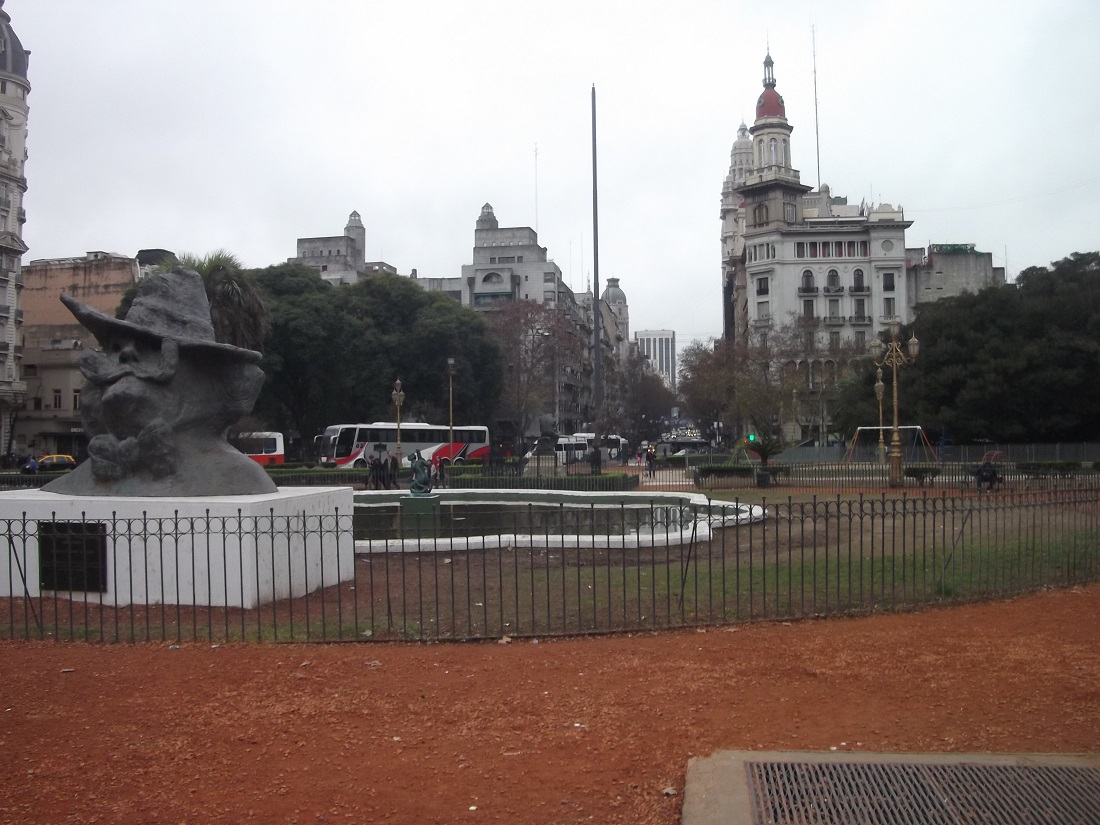
 We stopped by a park along the way to rest our feet.
There was a high voltage warning sign by the fountain. So we had to be careful not to touch the water.
Screw it! We're rebels!
The Buenos Aires Japanese Garden 
It was quite a walk, but we finally made it. It costs 70 Argentine pesos (4.50 USD) to get in. It's pretty much everything you'd come to expect from a Japanese Garden. 
The last time we'd been to one was at the Morikami Japanese Garden in South Florida way back in 2003. The only thing that the B.A. Japanese Garden was missing were these huge Zen gardens that Morikami had. It was still quite beautiful though. Take a look for yourself and don't forget to click on the images to enlarge.
The garden was so peaceful I almost wanted to move in here.
Anyone in  the mood for chess?
It took about an hour and a half of slow walking and picture taking before we finished touring the whole garden. Then we headed off in search of a comic book store that had a Funko Pop figure from the film "Alien."

Searching For An Alien
We asked someone at a bus stop for directions to the comic book store . It turns out that it was a lot further than we thought. A kind young man (did I really just write that? What am I? 70?) told us which bus to take and even got on it with us and told us when to get off.

Along the way, I saw a Ticketmaster booth. Apparently, Buddy Velastro from Cake Boss was in Argentina to film a couple of episodes, but the tickets were sold out. Oh well!
We also found a diner called Trixie, which looked a lot like a 50s style American diner. It was on our list of places to eat, but when I went inside it reminded us a bit of John's Diner, a local eatery in the Bronx neighborhood we used to live in back in the States. We were still pretty full from Wendy's so we just kept walking for what seemed like the side of forever in search of this Alien Funko Pop figure.
Somewhere Over The Train Tracks ... But Where?
The more we walked through the neighborhood, which they've named SOHO, like in New York City, the more we realized that we had gone a bit too far from the area where we were staying at.
Fortunately, after buying the figurine, the guy at the store told us where to find the nearest subway station. Define nearest! Both he and the cop we asked along the way claimed that it was about 7 or 8 blocks. It was more like 30. We made it, but not without a couple of blisters on our feet. By the time we got back to the hotel, we were ready to relax, watch TV and go to bed.

With three days left, we were looking forward to enjoying a meal at T.G.I.F., assuming we could find it, and visiting the nature conservancy in B.A. But that's a story for next time.

Thursday, July 21, 2016

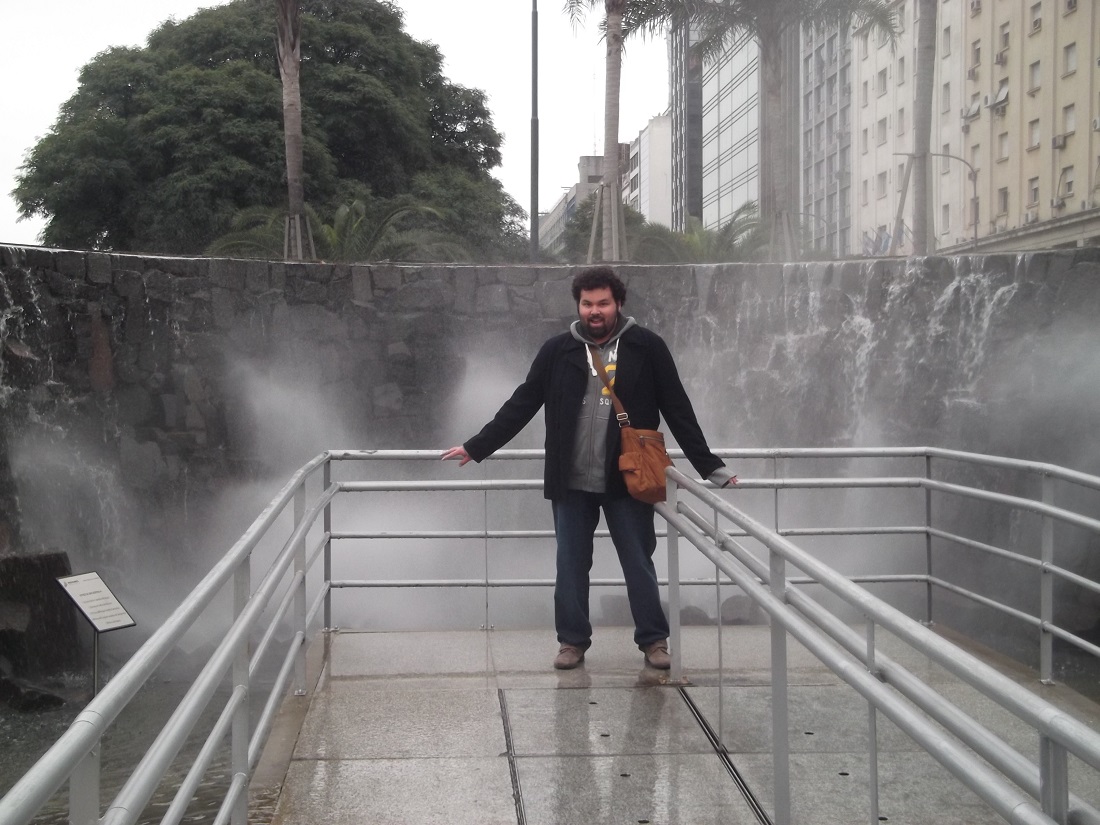
Heading To Buenos Aires 2016: Part 1 - We Got Wet!

It's been three years since we visited the beautiful city of Buenos Aires. Since this was our third time here, we decided to explore new areas, and also to see if anything had changed in the city, particularly as a result of the change in government.
First of all, if you're going to travel by train from Cordoba, make sure to book your tickets at least a month in advance. In 2013, we weren't able to buy our train tickets until 10 days before our departure date. We went to the train station this year with that idea in mind and we were in for a rude shock. All the seats and sleeper cars were booked. Apparently, July is a major vacation month nationwide. We were screwed. Fortunately, the bus station was right across the street.

We were expecting to pay 2,100 Argentine pesos (139.95 USD) for two round trip tickets from our host province of Cordoba to B.A. and back again, but we ended up paying 500 pesos extra (33.33 USD) from the bus line "El Practico".

We used the "El Practico" bus line in 2013 during our second visit and we were very pleased with the cleanliness, the food, and the service. I don't know what we did wrong in 2016. We were expecting quiche, wine, coffee and dessert like last time. Instead, we got this disappointment.
Suffice it to say we were starving most of the trip to B.A. It's winter down here so having the heater on all night was to be expected, but they had it so high that it was almost impossible to breathe. The restroom was a mess and everything smelled like a giant ashtray.

Once we got to B.A. we noticed that they mishandled our luggage and they ended up ripping the outer lining. I'm not the kind of person that stays quiet. In fact, I tend to get pretty irate when stuff like this happens, but my partner prefers that I keep a level head and we did go to B.A. for some R&R, not to pick a fight. So I decided to bite my tongue.

As we exited the station, we noticed a lot more homeless people than in 2013, but I'll get to that a little later. There was graffiti on the wall voicing just how much the cab drivers don't like the idea of Uber being in service here.

The one thing we avoided doing last time was getting on the subways or using the buses out of fear of being mugged. This time, however, we wanted to move around the city a little easier. So we decided to get a SUBE Card.
It cost us 50 Argentine pesos (3.33 USD). We got one from a lady at a newspaper stand. I know. You're probably thinking that this was stupid. Actually, the person who referred us to the stand was a cop, so we risked it. Then we went and charged our card at a charging station before leaving Retiro, the area where the trains and bus stations are located.
We decided to walk to Magic Donuts, a shop that serves high quality donuts, somewhat equivalent to those you'd find at Dunkin Donuts back in the States.
It was very far from Retiro, but we didn't want to get on the subway with our luggage. So after enjoying some delicious donuts, we walked to Mundial Hotel. We were a little too early to check in, but they allowed us to leave our luggage in the hotel.
We decided to spend some time walking around the city, but something was off. Now I'm not sure how to explain it, but things looked a little grim. Of course that could have been the result of the weather. The thing that bothered me was the number of homeless people that had set up beds and makeshift shelters in the same plaza I'd visited three years earlier. In fact, the plaza was littered with homeless people. I'm not dogging the homeless. I just don't know if their growing presence was the result of the country's recent massive economic decline over the last few months. 
Then it started to drizzle. Fortunately, our room was ready so we headed back to the hotel. We were pretty satisfied with Mundial Hotel in 2013, but this time, the quality of service was not the same. Our hotel room had a turd in the bathroom trying to come out of a drainage grill on the floor. Naturally the restroom smelled like... well, you know. So I went downstairs and they had housekeeping come up and take a look. They just looked at me and said, "Would you like us to pour some chlorine over the pipe?" And I'm like, "No! What I want is a clean room, turd free, please!" We got one. Well, it wasn't very clean. There were stains on the walls that looked like bodily fluids... and I'm not talking about blood. Plus, you could hear the traffic down below and it was annoying as hell. How were we going to get any sleep? Unfortunately, this was the best they could do. We could have gone to another hotel, but we were exhausted.

Later that night, we went to buy pizza from Ugi's. Their pizza dough is the closest thing we've had to pizzas from back home, minus the pepperoni. We fell in love with Ugi's last time, so we were looking forward to eating these two pizzas. Thank God they didn't disappoint us. Sure the boxes got a little wet on the corners, but that was thanks to Mother Nature, who decided to rain on our evening 12 blocks before we got to the hotel.
The noise from the traffic below had died down around 11 p.m. so I headed to the window to close the curtains, but caught sight of more homeless people lying on the sidewalks below. It was truly heartbreaking.
I tried to distract myself by turning on the TV. Last time we were here, there were a couple of channels that offered U.S. programming with Spanish subtitles. But now, practically every show was dubbed in Spanish and not done very well at all. So I turned the TV off and decided to focus on the remaining 4 days of fun and adventures that were ahead of us.

Click on the link below to see how our trip went when we visited the Japanese Garden.


Monday, June 20, 2016

Expat Report: Year 4 - The Cost Of Living

It's been four years since we moved to Argentina and it still amazes us how we've managed to survive. When we first got here, we were thrown for a loop and it's been an emotional roller coaster ride ever since.

We've been around for two Argentine presidents and the only constant thing we've seen is the country's financial crisis getting worse.


The Cost Of Living
Utility bills have skyrocketed, particularly since the current president took away the subsidiaries, which gave people here a bit of a breather from some otherwise costly utility bills.

Things have gotten pricier between 2013 and 2016 (sorry, I don't have the prices for 2012).
2013
2016
2013
2016


2013
2016
Should I even talk about how badly the value of the Argentine peso has gotten? Particularly in the last seven months?
  • On December 31st, 2012, the cost of one US Dollar in Argentine pesos was: 4.90
  • On December 31st, 2013, the cost of one US Dollar in Argentine pesos was: 6.51
  • On July 29th, 2014, the cost of one US dollar in Argentine pesos was: 8.19
  • On December 24th, 2015, the cost of one US Dollar in Argentine pesos was: 12.97
  • On June 19th, 2016, the cost of one US Dollar in Argentine pesos was: 13.89

Essentially, in today's current Argentine economy, the Argentine pesos is worth .07 cents in the U.S. 

On the plus side, people are able to send and receive money through Western Union now, which was practically unheard of when we first arrived here in 2012.

The new president seems to be invested in allowing importing and exporting again, which means we could be seeing food and other products from the States trickle down to Argentina. We can only hope.
These are some of the products that are already available. Bacon and Pepperidge Farm Goldfish snacks aren't easy to find. Snickers and Skittles are easier to get. The most notable addition we've seen in 2016 is coleslaw.
Yay! Bagels!
Bacon Gets A New Name
One thing I found odd was that they changed the name of bacon, which they called 'breakfast bacon' on the package to a lengthy Spanish name which is 'panceta salada cocida y ahumada'. I can only assume that this was done to get people here to buy the product. Ironically, I've only seen it sold in Walmart and they sell like hotcakes.

Employment
Employment opportunities have decreased all across the board. Take a look at the number of jobs that were available on Computrabajo.com on October 2015. In less than a year, the number of opportunities decreased.
October 2015


June 2016
Companies I've reached out to through LinkedIn or local temp agencies don't contact me, despite the fact that I'm more than qualified for the job. I've been looking for a legit 9 to 5 job for the last four years without any success. Freelancing is okay, I supposed, but it's sure as hell not a career. The pay sucks, and I get treated like garbage.

Obama's Visit
Obama was invited to visit Argentina this year and unfortunately, a lot of Argentinians weren't happy about it. Much to my sorrow, I saw anti-American posters like this one all over the city. They try to blame the U.S. for being involved during The Dirty War of the 70s, which saw the disappearance of over 30,000 people in South America, but that's just ridiculous!
Translation: Leave Obama! We're against the impunities of yesterday and today. No to the adjustment of Macri.
Seeing posters like this one up on walls in the downtown area hurts like hell, especially when you know that the hatred being spat out isn't warranted. 

Issues At Home
Being gay makes us feel even more isolated than it would if we were in the States. Back home there was practically an LGBT center in every city we lived in. Here there aren't any, at least not in Cordoba. Try joining an LGBT group online and it's usually for hookups and not actual community support. Case in point, the recent Orlando shootings at a gay club. Even being thousands of miles away, it still hurts to hear such terrible news, but there's really no one here to talk to that really gets it.

Case in point: A Doctor Who forum recently announced that an LGBT character would be introduced to an upcoming spin-off series, and the response from the locals was not necessarily a positive one. In fact, one person went as far as to say that being gay is such a popular thing these days that he's not surprised and that it's all part of the LGBT militia. Oh, and by the way, any time that Argentinians don't like something, they associate it with a militia. The level of ignorance is outstanding.
Translation: The LGBT thing is so popular that everyone is using it.

Comment 1:It seems like sexuality in a program like this one is irrelevant and would not help the storyline. It seems more like a desperate attempt to appear inclusive due to pressure from LGBT militia extremists.

Comment 2: How fragile is the wholeness and determination of an individual if they need to see a representation of themselves in order to know that other people like themselves exist?

Zach and I have begun feeling isolated. So much so that we barely leave our house anymore, except when we hang out with our Argentine friends, who are dear to us.

We've strongly considered moving back. In fact, we were certain, and had the financial means to go back home to the States by September of this year, but there were some complications that we hadn't foreseen. As devastating as the decision to remain stranded here was, we also knew we had to figure out how to make the next 30 or so years work without wanting to jump off a bridge.

Right now we're playing it by ear and trying to survive emotionally a day at a time. Fortunately, we're somewhat okay financially. I mean, it's not like we have to worry about rent, which is a huge expenditure here.

Keeping Busy
I'm working on going back to school in August for a one-year career program. I've also been working on republishing my novels. The original versions were okay, but since I've grown as a writer, I felt I needed to do some major polishing on the novels. The first novel will likely be reintroduced sometime in August or September and available on Amazon. But I'll keep everyone posted on my progress in the near future. The goal is to have at least 6 novels and one non-fiction book based on my experience as an expat published by the end of 2018 or early 2019.

Over the last four years people have asked me for advice on moving to Argentina. Different provinces provide different pros and cons. You also have to ask yourself what you're hoping to gain. Are you planning on retiring, looking for work (good luck!), etc.? Our goal was to go into  early semi-retirement, but things didn't go so well. You might have a better shot in Buenos Aires, in the CABA area. It's livelier, there are more job opportunities, and it's a lot more multi-cultural and fun. All I can recommend is that you dip your toes in the water before jumping in the pool.

Saturday, April 16, 2016

The Perks Of Free Health Care In Argentina


Free health care is one of the perks of moving to Argentina. Despite a handful of locals who feel that health care should be limited to Argentine citizens or foreigners who are Argentine residents, free health care is available to anyone, regardless of what country you're from and I doubt that this is going to change anytime soon.
Should we charge medical expenses to foreigners who are non-residents? 1) Yes, because they are not residents. 2) Free medical care should be limited to emergencies only 3) No, because it would violate human rights.

There have been a few changes since I last wrote about the free health care process a few years ago so here they are. Keep in mind that I am currently in the province of Cordoba and my particular experience is in the public hospital called "Hospital Nacional De Clinicas".


For starters, you can't make an appointment at the "centro de turnos" anytime you want to anymore unless you have health care benefits (obra social). So foreigners and locals living in Cordoba without insurance have to go at the crack of dawn to the hospital and wait two or three hours to get a number to schedule an appointment. They only give out 70 per day, hence the reason why you have to go so early... like 5 a.m.
A few years ago you had to pay an outpatient fee called a "bono" which was super affordable anyway. Now you no longer have to pay a dime. In fact, there are signs posted throughout the hospital reminding patients that no area in the hospital is allowed to charge patients under any circumstances, which might explain why the dental services have gone the way of the dinosaur.
Once you have your own doctor, they'll order some blood work which you have to get done in the lab section of the hospital. You'll need to schedule an appointment for this as well at the "centro de turnos". The blood work takes about a week and a half, depending on what you're being treated for. When the results come back they are sent to your doctor. You'll just need to schedule an appointment to see them and get the results.

Free Vaccinations
If you want to get flu shots or any other form of vaccination you can report to the "vacunatorio". Their hours of operation are from around 8 am to noon. They may or may not have the shots your doctor prescribed. So you may end up having to visit other public hospitals. Don't worry! The vaccines are free! 

If you have an emergency and you can't wait, there is an emergency room (Sala de Urgencia) available and you can go anytime 24 hours a day.

A Spanish Speaking Hospital
It's a safe bet that they don't have English-speaking staff in the hospital, though you may find a handful of people who can speak English. Your safest best is to bring a native Argentine with you (friend, spouse, neighbor) if you don't speak any kind of Spanish.

Prescription Medicine
Prescription medications are not free. Whatever you have to get at the local pharmacy may cost you heavily. For example, my husband started buying Soriatane to treat his skin condition, which three years ago cost about $250 Argentine pesos ($17.81 USD). As of March 2016, that medicine now costs $740 Argentine pesos ($52.72 USD). Yeah! It was a major price hike, especially if you're living solely on the Argentine economy, which has been facing some serious declines, particularly in the last couple of months. I've spoken to a lot of locals who have struggled to buy their medication even with health care benefits (obra social). Imported medications are usually the most expensive and they don't always have a generic brand that is more affordable.

In cases where patients suffer from more serious health issues like diabetes, cancer or AIDS, the government will pay for the medicine required if you cannot afford it. However, there's a lengthy amount of paperwork and wait time. So keep that in mind if your sole intention is to come here to treat something serious. You can always bring USD and lots of it... just in case. But remember, you can only bring in $10,000 USD into the country per trip.


If You're Thinking About Having Your Baby Here
If you're pregnant and are thinking of having your baby here in Cordoba, then most people would agree that you're better off going to a private hospital. There's a hospital called Sanatorio Allende in Nueva Cordoba, and that particular hospital has a department for international patients. This is great because you won't have any issues finding someone that speaks English.

But there's one thing you shouldn't expect and that is pain relief. They don't use gas or an epidural to ease your pain, so good luck experiencing the miracle (and pain) of birth.

Dental Care
Some people have asked me to write about the dental health care coverage. So as I've said before, the Hospital Nacional De Clinicas in Cordoba does not offer free dental service. However, you can look around for a good dentist and the cost is still pretty manageable, and I say this having recently undergone a full cleaning, which cost $400 Argentine pesos ($28.50 USD),  an oh-so painful wisdom tooth extraction for $800 Argentine pesos ($57.00 USD) and 10 cavity fillings for $2,800 Argentine pesos ($199.49 USD). Yes! I had 10 cavities! Sue me for eating a lot of sweet stuff! Of course, these prices vary from one health care professional (and province) to another.

Conclusion
Like any other country, Argentina has its pros and its cons, but free health care is something that not many countries offer to locals and foreigners. It's a blessing that I urge everyone to consider taking advantage of because there's nothing more important than our health. Plus, if those few xenophobic malcontents become a massive chorus in the future and influence the government to charge foreigners, the concept of free health care could go up in smoke!

Take a look at the original post I wrote back in 2013 to compare how things have changed in the free health care system in Argentina.